Fun, exciting and full of special moments

Early Years

Reception at Dringhouses Primary School

The Reception year at Dringhouses is fun, exciting and full of special moments. Our intention in Early Years is that our young learners develop the skills they need to be resilient, thoughtful individuals that challenge themselves, problem solve, negotiate and communicate effectively with one another. Our engaging, safe and positive environment allows children to thrive academically, personally and socially. Relationships with each other are of the upmost importance and children learn to share experiences positively and confidently ensuring strong and healthy bonds throughout their time at Dringhouses Primary School.

Below you will see a flavour of how we implement our intended curriculum and the learning that takes place in Reception. The impact of our EYFS curriculum is children who thrive academically, personally, socially and emotionally. They have a love of learning, are resilient to challenges and have a strong foundation of skills and knowledge which ensures a successful school journey throughout their time at Dringhouses and beyond into the wider world. If you have any further questions, please feel free to contact us.

Rationale for the Reception curriculum at Dringhouses

At Dringhouses, our school culture of high expectations for learning and behaviour is introduced in Reception and continues through to Year 6 with Reception children forming part of a successful, hard working school community. Children are inspired and motivated to learn more about themselves and the world around them in a caring, engaging and supportive environment. 

We provide a carefully planned, structured and monitored, child-initiated and adult-led curriculum that enables each child to develop maximum levels of self-confidence, self-motivation, and resilience whilst learning positively, happily and collaboratively with others. The EYFS curriculum is carefully mapped out and designed to ensure that children have the fundamental skills and knowledge needed to ensure a strong foundation ready for the challenges of Key Stage 1 and beyond. We place a huge importance on the development of children’s vocabulary and communication skills needed to support their academic, social and emotional development and success. This is implemented through a language rich environment, embedded through exciting texts and appropriately planned and modelled communication and language skills. 

Aims of Reception learning at Dringhouses

  • Reception children at Dringhouses engage in a stimulating curriculum that ensures that all seven areas of the Early Years Foundation Stage (EYFS) are addressed with the understanding that securing the essential skills of reading, writing and mathematics enables successful learning across all other subjects;
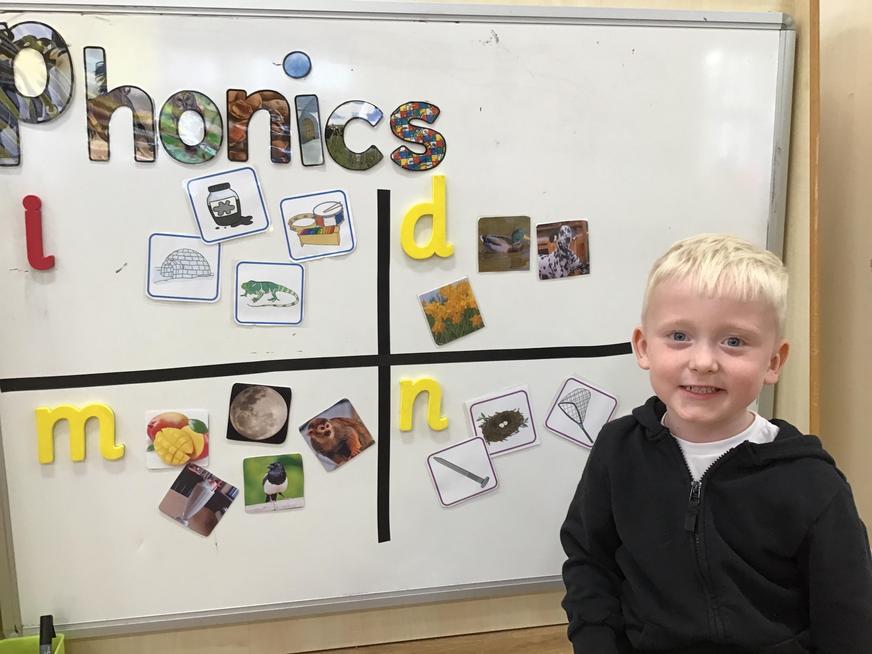
  • The teaching of early reading, including systematic, synthetic phonics, is central to the Reception year at Dringhouses;
  • Our carefully planned areas of provision allows children to explore and investigate both new and familiar topics with enhancements to develop basic skills e.g. phonics, writing and number. Adults skillfully play alongside children ensuring progress through higher level questioning and support;
  • A wide variety of teaching approaches are used to support, encourage and challenge children in their learning scaffolded by our Learning Projects. Child led play can lead us to a completely new adventure!
  • As children progress through the Reception year, they are gradually exposed to more formal teaching and learning through whole class teaching and guided group work in preparation for moving into Year 1.

What and how do the Early Years children learn?

Daily Phonics

Learning to read begins with a systematic approach to the teaching of phonics, which begins in Reception and continues into Key Stage One (and into Key Stage Two where appropriate). At Dringhouses, we use the FFT Success For All Phonics Scheme which provides a highly structured and effective approach to reading through both daily phonics and whole class reading sessions. The focus of the weekly texts link directly to the focus of the phonics sessions and this allows for children to acquire and practise their segmenting and blending skills whilst developing fundamental reading comprehension skills.

Reading

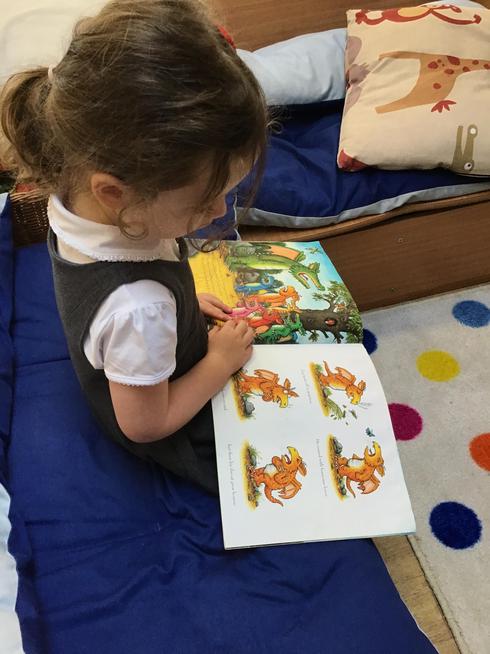
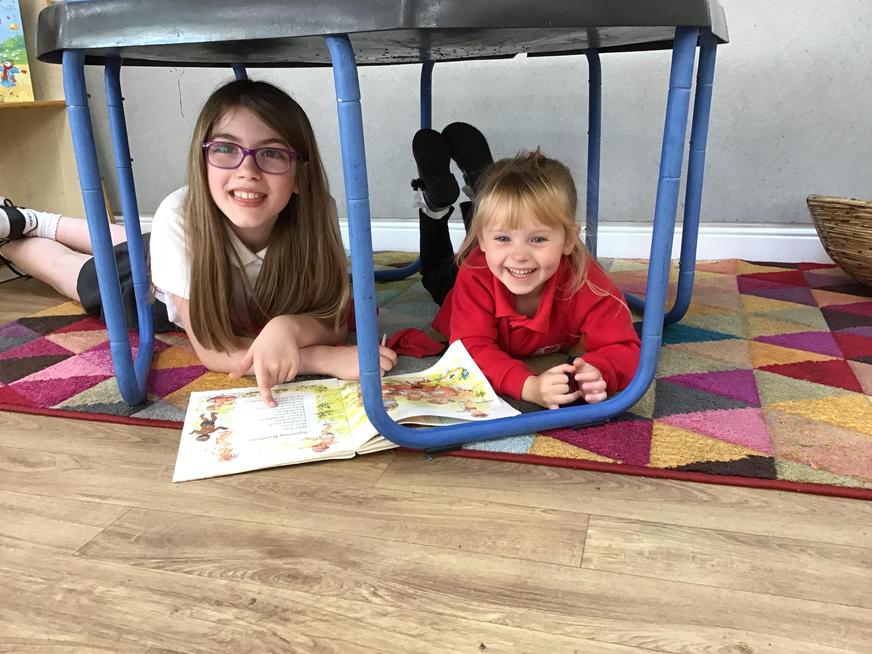
We love reading at Dringhouses Primary School! As well as daily opportunities to read in our phonics and whole class reading sessions, children have access to a wide range of engaging and exciting books throughout the provision and teacher inputs.  Our wide and varied opportunities to read include literacy lessons, drawing club sessions, whole class reading, 1:1 reading, reading with Year 6 buddies and weekly school library sessions as well as story times.  We are keen not only to develop reading skills but also a lifelong love of reading. Each child takes home a  book-banded reading book and books are changed regularly.

Children start their reading journey on wordless picture books before moving onto phonically decodable books, in which they are able to successfully and accurately apply their phonics learning to segment, blend and read a variety of texts.  We use high quality texts to drive and enrich not only the English curriculum but also our wider curriculum in which we use a range of varied and exciting texts that appeal to our pupils. 
Mark making, handwriting and writing

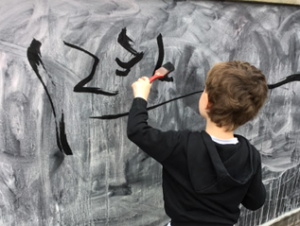
As a school, we understand the importance of the Reception year in establishing children as successful writers. Mark making and writing are essential life skills that  we teach and share through fun, purposeful and exciting experiences. Children are given lots of opportunities to mark make and write in adult-led sessions as well as throughout the provision using a variety of resources. In the Autumn term, our handwriting teaching focuses on the pre-requisites for writing as we develop our gross and fine motor skills. We use dances from ‘Squiggle while you wiggle’ alongside dough disco and focused provision to help our children develop the strength and coordination they need to write proficiently. As the year progresses, we combine our letter teaching in phonics with extra handwriting sessions that embed letter formation and help our children to form their letters correctly, giving them a strong foundation to build further upon in Year 1. 
Daily mathematics

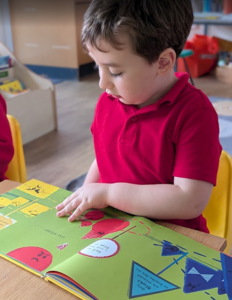
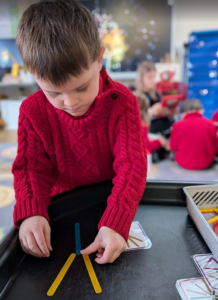
As with reading and writing, mathematics is everywhere in the Reception classrooms at Dringhouses. In addition to focused teaching sessions, children enjoy learning through real life experiences, be it weighing out ingredients to bake biscuits, pouring a drink that does not spill or playing shops – the mathematical brain is always working.  At Dringhouses, we use White Rose Maths Hub resources, Numberblocks, practical resources, problem solving activities, games and number rhymes and songs to develop a love of maths and a deeper understanding of number, numerical pattern, shape, pattern and measures. 
 

Inclusion

We believe that every child should have the opportunity to fulfil their potential. Inclusion is at the very heart of our curriculum and daily practice. Activities are carefully planned and resourced with this in mind ensuring access to all. Children are closely monitored  and supported where needed. We have many tools and sessions that we utilise to provide extra intervention for those who may need it. These include, but are not limited to, Daily phonic interventions, Wellcomm,  Handwriting interventions and Talkboost or ELSA Sessions.

Children identified with special educational needs (SEN) embrace our language rich curriculum. Support plans and packages are carefully and collaboratively planned with parents and carers and reviewed regularly.

Physical development

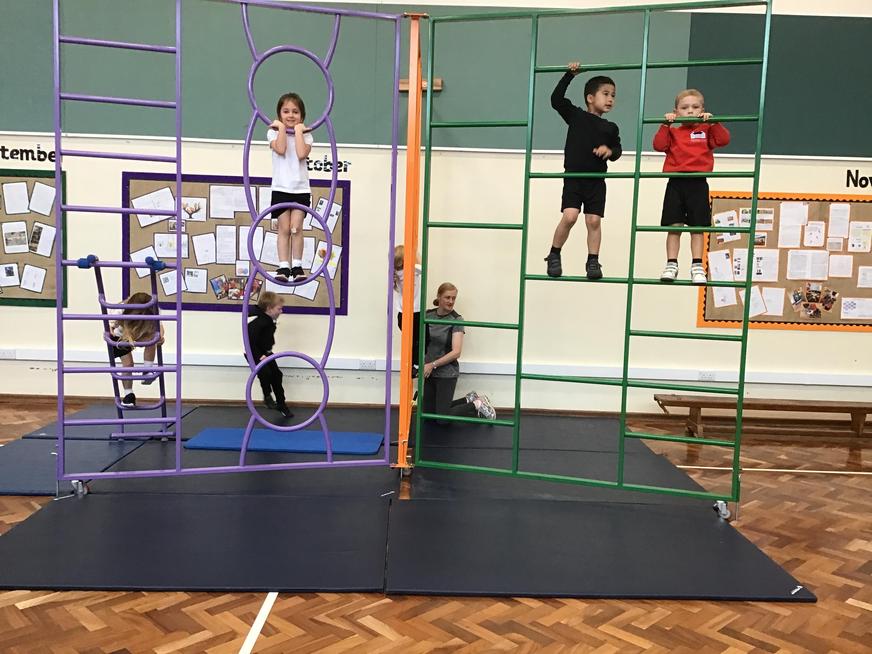
Activities are planned to provide opportunities for children to be active as well as develop their co-ordination, control and movement. These activities include daily access to the outdoor provision, Squiggle While You Wiggle sessions, weekly PE lessons taught by a PE specialist and regular Outdoor School sessions.  Children also have regular time to access scooters and tricycles and use the larger trim trail on our main playground. These all help support the development of both fine and gross motor skills.

Fine motor skills

Fine motor skills are involved in smaller movements that occur in the wrists, hands and fingers. It is important that children have the opportunities to strengthen these areas of the body in preparation for writing and forming letters, developing their drawing skills and for many other activities in daily life. In the Early Years at Dringhouses we provide a range of different activities to support this development including:

  • Cutting and using scissors
  • Using tweezers or tongs,
  • Threading
  • Using pegs to develop our pincer movement
  • Use of malleable materials such as play dough or salt dough
  • Puzzles and jigsaws
  • Drawing with pens, pencils, crayons, pastels and lots of other mark making materials
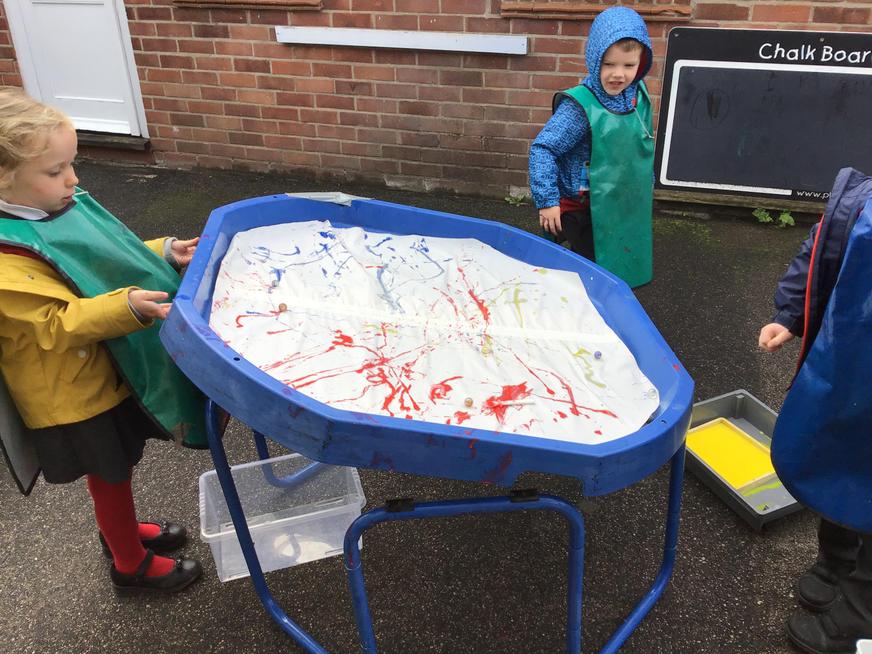
  • Painting with various sized painted brushes, cotton buds or sticks.
  • Model making with bricks such as Lego, the Mobilo or using matchsticks and playdough
  • Explicit Dough Disco sessions

Gross Motor Skills

Gross motor skills are involved in movement and co-ordination of the arms, legs, and other large body parts. For children to develop larger movements and have the ability to walk, run, hop, skip, slide, catch, jump and kick safely they must practise these movements regularly. Activities to strength these movements include:

  • Riding scooters
  • Using the climbing wall and trimtrails outside
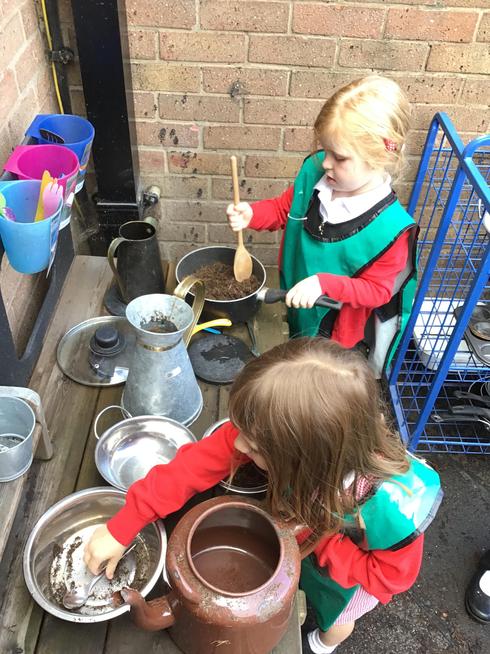
  • Using big tools such as rollers, spades, rakes or brooms to paint, dig and clean with
  • Travelling in different ways across different things including crawling, balancing, climbing
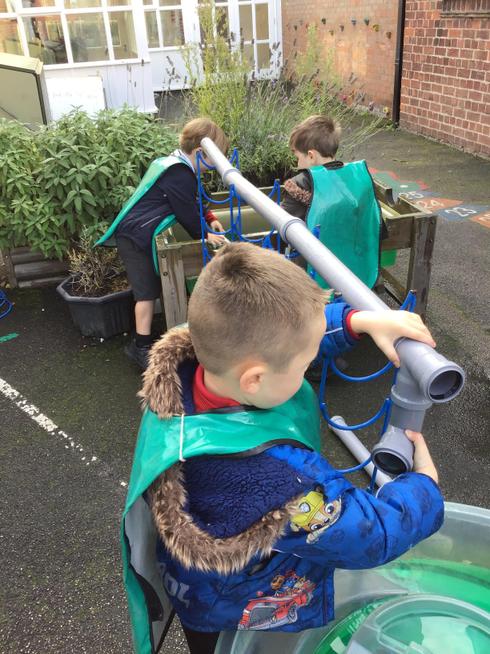
  • Carrying large boxes and crates in our Outdoor provision
  • Using Large apparatus in PE lessons


Health and self-care

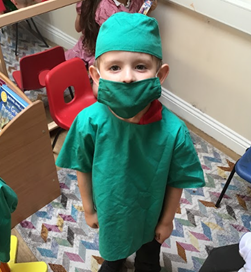
Children at our school are supported to become independent, caring and resilient individuals. This begins with being able to look after both themselves and their belongings.  Our pupils  have the opportunity to find out about how to keep their bodies safe and healthy via quality first teaching sessions including circle times and using PSHE focused books.  We support them to understand the importance of physical activity, and to make healthy choices in relation to food. Regular cooking and baking lessons support children in their understanding of food, diet and healthy lifestyle choices.  We place emphasis on good hygiene, with regular discussions about oral hygiene delivered by staff as well as a visit from a local dental practitioner who talks to the children about how to keep their teeth healthy.


Personal social and emotional development

As the first year of their school careers, we are aware of the importance of children developing a positive sense of themselves and others. We want to ensure that the children in Reception are confident to be themselves whilst respecting the views of others and that they are accepting of differences. They know that differences’ in attitude, experiences, habits, creativity and perspective are what makes us who we are. The children are taught about the world around them beyond their immediate experiences and are accepting of other cultures, communities and religions. They are supported to form positive relationships and have respect for others. Children have opportunities to develop their social skills and learn how to manage their feelings appropriately in different contexts. We introduce children to the zones of regulation, helping them to recognise how different feelings may present themselves and giving children different strategies to help with a variety of feelings. As a school, we are passionate about developing Growth Mindset from an early age with children in Reception developing a “can do” attitude and a positive approach to challenges. All of the children in Reception have a voice and their different opinions are discussed, respected and appreciated.


Communication and language development

Children’s language development is crucial in Reception and underpins our learning across the curriculum. It is our intention that throughout Reception children will develop into confident, thoughtful and attentive communicators. The ability to communicate effectively is a fundamental, key skill and the better a child is at it, the better their future prospects will be. A rich language environment and a curriculum rooted in the development of communication and language allows children to develop their confidence and skills in expressing themselves and to speak and listen in a range of situations.

At Dringhouses we realise these ambitions by fostering good language skills that will make it easier for our children to strike up conversations with peers, listen to others and interpret nonverbal clues.  As a school we utilise Wellcomm to assess and then further develop children’s communication and language combined with our school wide focus on Oracy. We use principles of Drawing Club to introduce vocabulary as something that children can become excited about.


Understanding the World

We have implemented an EYFS curriculum that allows children to learn about the world around them and the people in it. We provide a range of exciting and interactive learning experiences including visits to local landmarks, visits from significant people in our community as well as the opportunity to explore the local area. At Dringhouses, we foster an ethos of curiosity and challenge amongst the children and encourage them to discuss, share, compare and question what they see, what they know and what they would like to find out. Children’s own interests and adult led learning allows children to broaden their knowledge and skills and creates a strong foundation ready for learning in Key Stage 1 and beyond.
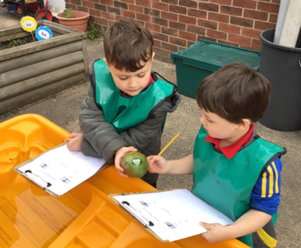
Children’s knowledge grows the more they experience. We provide experiences linked to the world, people and technology, fostering:

  • Respect and understanding of others
  • Knowledge of religions and cultures beyond their own immediate experiences
  • Understanding of the animal kingdom, habitats around the world and how we can be an active citizen in looking after the planet


Outdoor Learning and Forest School

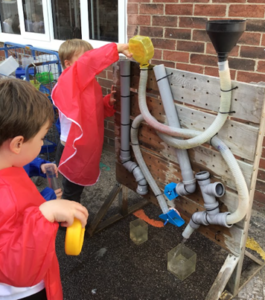
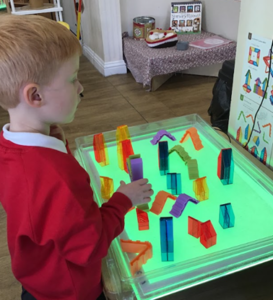
Learning outside supports the holistic development of the child. As well as accessing our Early Years playground with outdoor provision, children have regular outdoor school sessions that take place in our local area.  We follow a plan over the year that looks as seasonal change, the environment around us and how we can interact with nature.

 

Expressive arts and design

Expressive arts and design supports children to use different materials and media to express themselves through art, design, drama, music, movement and dance. At Dringhouses, we have a specialist music teacher and our Reception children benefit from weekly sessions with her.  In these sessions they develop many different skills and are able to experiment with sound and movement as well as listening to music and making their own compositions. Children’s learning and development in this area is enhanced by the use of resources that are readily available for the children to express themselves creatively, independently and collaboratively:

  • Paint
  • Crayon
  • Colouring pencils
  • Chalk
  • Fabric
  • Play dough
  • Clay
  • Modelling materials
  • Joining materials such as glue and sellotape
  • Collage materials

Being imaginative is an integral part of Reception learning. Children are encouraged to use their imagination in all areas of their learning. This encourages problem solving skills, independence, resilience, perseverance and exploration.


Parent partnerships

We understand that building secure relationships with children and their families is absolutely key to providing a successful learning experience for children throughout Early Years and beyond. Working closely together we aim to ignite the children’s love of learning, with parents feeling that they have the knowledge, skills and tools needed to support their child at every step in their learning journey. Tapestry is used to allow staff and families to communicate with each other on a regular basis about the learning that is taking place in school. Families are also able to share home experiences by uploading pictures and sharing activities and it is a privilege to be able to see the children and their experiences out of school.

In addition to Tapestry, there are plenty more opportunities to further strengthen our partnerships.

  • Parents evenings to update on progress
  • Inviting parents into school to share in their child’s learning
  • Information sessions about aspects of the children’s learning
  • Reading diaries are sent home daily where both parents and practitioners can record listening to children reading
  • Weekly phonics and maths homework that supports the learning in school and shows parents that we are working on in class
Skip to content